Web hosting is no longer just about uptime and storage—it’s evolving into a smart, automated, and performance-driven ecosystem. If you’re still thinking in terms of traditional hosting (buy server → deploy site → done), you’re already behind.
The future is being defined by AI integration, infrastructure innovation, and shifting user expectations. Let’s break down what’s actually changing—and what you need to adapt to.
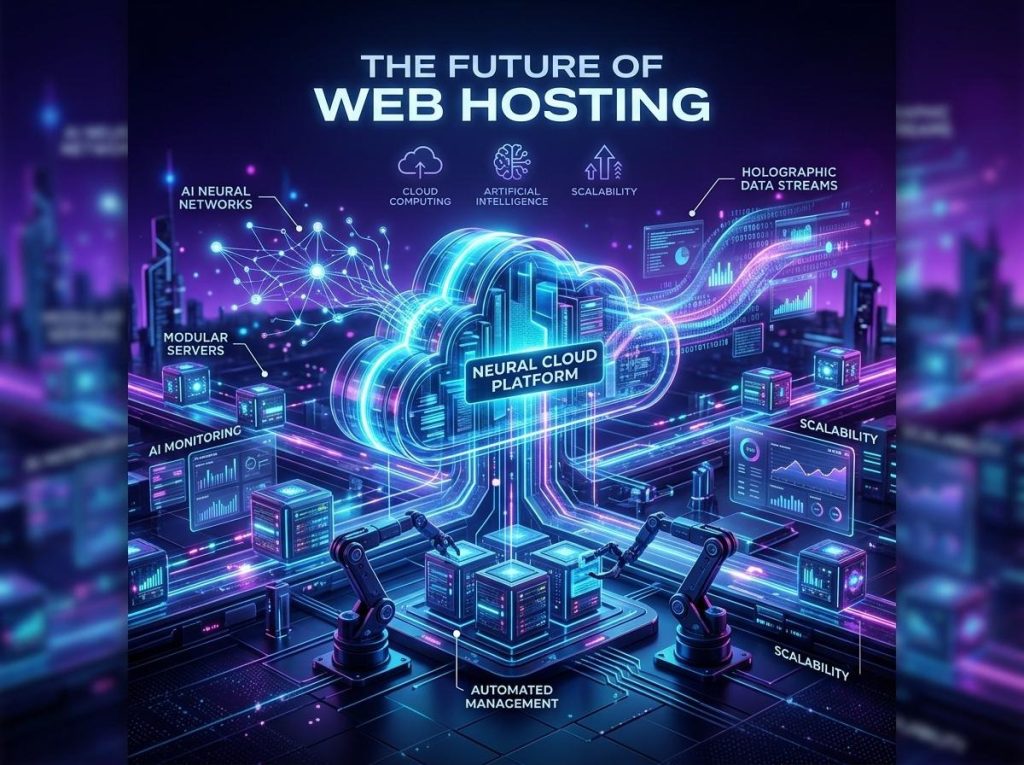
1. AI-Powered Hosting Is Becoming Standard
Artificial Intelligence is moving from “add-on” to a core infrastructure layer.
Modern hosting environments are now leveraging AI for:
- Automated server optimization
- Predictive resource scaling
- Threat detection and prevention
- Smart load balancing
Instead of reacting to issues, systems now predict and resolve them before impact.
👉 Strategic takeaway: Manual server management is dying. AI-driven automation is the new baseline.
2. Autonomous Infrastructure (Self-Healing Systems)
Hosting is shifting toward self-healing environments.
What this means:
- Servers detect failures automatically
- Systems reroute traffic in real time
- Downtime is minimized without human intervention
Container orchestration tools like Kubernetes heavily drive this.
👉 Result: Higher uptime, lower operational overhead.
3. Edge Computing Is Reshaping Performance
Centralized data centers are no longer enough.
Edge computing pushes data closer to users, reducing latency and improving speed.
Key impact:
- Faster content delivery
- Better real-time processing
- Improved user experience globally
Companies are deploying edge nodes worldwide to stay competitive.
4. Serverless Architecture Is Growing Fast
Traditional servers are becoming abstracted.
With serverless:
- You don’t manage infrastructure
- You only deploy code
- You pay only for execution time
Platforms like Amazon Web Services are heavily investing in this model.
👉 Translation: Developers focus on product, not servers.
5. Security Is Becoming AI-Driven
Cyber threats are getting smarter—so security needs to evolve.
Future hosting environments include:
- AI-based threat detection
- Behavioral analytics
- Automated incident response
Instead of static firewalls, systems dynamically adapt to new attack patterns.
6. Green Hosting and Sustainability
Sustainability is no longer optional—it’s a market expectation.
Hosting providers like Hostinger, OVHcloud, VPS Malaysia, are now:
- Using renewable energy
- Optimizing data center efficiency
- Reducing carbon footprint
Major providers like Google Cloud Platform are leading this shift.
👉 Competitive edge: Eco-friendly hosting is becoming a selling point.
7. Hybrid and Multi-Cloud Strategies
Businesses are no longer relying on a single provider.
Instead, they’re adopting:
- Multi-cloud (multiple providers)
- Hybrid setups (cloud + dedicated servers)
This approach:
- Reduces vendor lock-in
- Improves reliability
- Optimizes cost and performance
8. Developer-Centric Hosting Ecosystems
The future is built for developers.
Hosting platforms now offer:
- Built-in CI/CD pipelines
- API-first infrastructure
- Instant deployment environments
This reduces time-to-market and accelerates innovation.
What This Means for You
If you’re building or managing hosting environments:
- Adapt to AI-first infrastructure
- Prioritize automation over manual control
- Leverage cloud + edge for performance
- Invest in security and sustainability
Ignoring these trends isn’t just risky—it’s a competitive disadvantage.
Final Verdict
Web hosting is transforming into an intelligent, autonomous, and scalable ecosystem.
The winners in this space won’t be those with the biggest servers—but those with the smartest infrastructure.
If you align early with AI, automation, and modern architectures, you’re not just keeping up—you’re positioning yourself ahead of the curve.