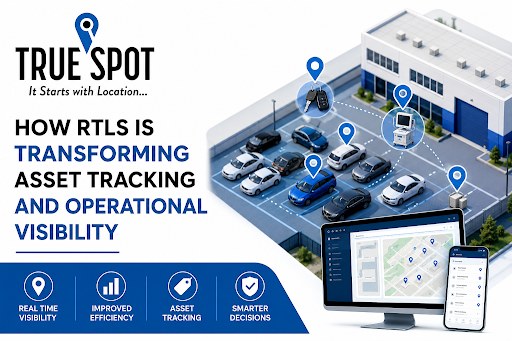
In industries where equipment, vehicles, and valuable assets move constantly, knowing their exact location can make a significant difference in productivity and efficiency. This is where RTLS technology has become an essential tool. Real Time Location Systems help organizations monitor assets, equipment, and resources in real time, reducing search times and improving overall operations.
Businesses across healthcare, automotive, manufacturing, and logistics sectors are increasingly adopting RTLS solutions to gain better visibility into their daily activities. With advanced tracking capabilities and location intelligence, organizations can make faster decisions and improve service quality.
What Is RTLS?
RTLS stands for Real Time Location System. It is a technology designed to identify and track the location of assets, equipment, vehicles, or personnel within a specific area.
Unlike traditional inventory management methods, RTLS provides continuous updates about an item’s location. This allows organizations to quickly locate assets whenever needed without relying on manual searches.
Modern RTLS platforms use a combination of sensors, tags, wireless networks, and software dashboards to deliver accurate location information.
Why Businesses Need RTLS Solutions
Many organizations lose valuable time searching for misplaced assets. This can lead to delays, increased operational costs, and reduced productivity.
RTLS helps solve these challenges by providing immediate visibility into asset locations.
Some major benefits include:
Reduced Search Time
Employees spend less time looking for equipment, tools, or vehicles. Everything can be located through a centralized platform.
Better Asset Utilization
Organizations can identify underused assets and distribute resources more effectively.
Improved Operational Efficiency
Real time visibility helps teams complete tasks faster and reduces workflow interruptions.
Enhanced Customer Service
Faster access to assets often leads to quicker response times and improved customer experiences.
Data Driven Decision Making
RTLS platforms generate valuable location data that organizations can use to improve processes and planning.
How RTLS Works
An RTLS system typically consists of several components working together.
Asset Tags
Small tracking tags are attached to assets, vehicles, equipment, or other valuable items.
Location Sensors
Sensors are installed throughout a facility to detect signals from the tags.
Communication Network
The network transfers location data from sensors to a central platform.
Software Dashboard
Users access location information through dashboards, mobile applications, or management portals.
The system continuously updates asset locations, providing accurate and timely information whenever needed.
RTLS in Automotive Dealerships
Automotive dealerships often manage large inventories of vehicles spread across multiple lots and storage areas. Locating a specific vehicle quickly can be difficult without a reliable tracking system.
RTLS technology helps dealerships:
- Find vehicles instantly
- Track key locations
- Reduce time spent searching inventory
- Improve vehicle delivery processes
- Enhance customer satisfaction
When customers arrive to view a vehicle, staff can quickly locate it instead of spending valuable time searching across the property.
This streamlined approach creates a more efficient dealership experience for both employees and customers.
RTLS Applications in Healthcare
Healthcare facilities operate in fast moving environments where equipment availability directly impacts patient care.
Hospitals and healthcare organizations use RTLS to track:
- Medical devices
- Wheelchairs
- Infusion pumps
- Portable monitors
- Diagnostic equipment
- Emergency resources
With RTLS, healthcare staff can quickly locate critical equipment when needed. This reduces delays and improves resource management across departments.
Healthcare administrators can also monitor equipment utilization rates, helping them make informed purchasing decisions.
Key Features of Modern RTLS Platforms
Today’s RTLS solutions offer far more than simple tracking capabilities.
Real Time Visibility
Users can monitor asset locations as movements occur.
Mobile Access
Many platforms provide mobile applications that allow users to locate assets from smartphones or tablets.
Historical Tracking
Organizations can review previous asset movements and usage patterns.
Automated Alerts
Notifications can be generated when assets leave designated areas or require attention.
Reporting and Analytics
Detailed reports help businesses understand asset utilization and operational trends.
These features transform RTLS into a powerful operational intelligence tool rather than just a tracking solution.
Challenges Solved by RTLS
Organizations often face common asset management problems that RTLS can address effectively.
Lost Assets
Equipment and vehicles can become difficult to locate in large facilities.
Manual Tracking Errors
Paper records and spreadsheets often contain outdated information.
Inefficient Workflows
Employees waste time searching for assets instead of completing productive tasks.
Excess Equipment Purchases
Organizations may buy additional equipment simply because existing assets cannot be found.
RTLS helps eliminate these issues through accurate location visibility and automated tracking.
Choosing the Right RTLS Solution
Selecting an RTLS platform requires careful consideration of business needs.
Important factors include:
- Tracking accuracy
- Facility size
- Integration capabilities
- Scalability
- Mobile accessibility
- Reporting features
- Ease of implementation
Organizations should choose a solution that can grow alongside their operations while providing reliable performance.
A well designed RTLS platform not only improves asset tracking but also delivers actionable insights that support long term operational improvements.
As businesses continue searching for ways to improve efficiency and visibility, RTLS remains one of the most effective technologies for managing valuable assets in real time. From automotive dealerships to healthcare facilities, organizations are discovering new ways to use location intelligence to create faster workflows, improve resource utilization, and maintain complete awareness of their most important assets.