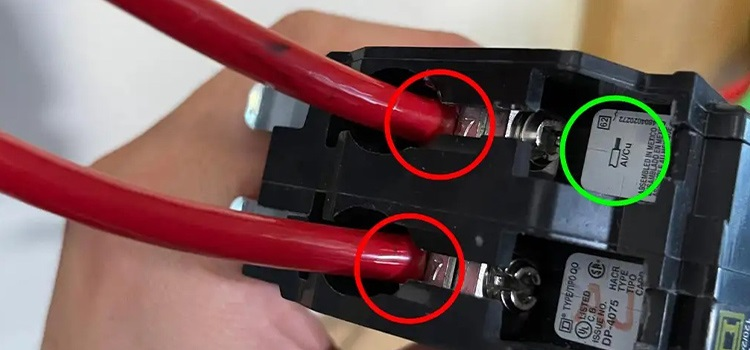
For safety and high-efficiency purposes of electrical system installations, accurate wire sizes are used. The accurate wire size of a 60-amp breaker should be known, either for home use or electrician use. In this tutorial, we will check the importance of wire size check variables considering the National Electrical Code’s (NEC) features and the features that give accurate wire size for a 60-amp breaker. Let’s start with a 60-amp wire size.
What is Wire Size
American Wire Gauge (AWG) is a standard measuring unit for wire size that is used for wire diameter. Each wire size comes with a certain number in the AWG system; having a lower number shows thicker wires. wire features for carrying high current with a smaller wire size
Importance of Correct Wire Sizing
It is best to select accurate wire sizes for different uses. The first and most important factor is the safety parameters. The chances of an electrical fire are reduced due to accurate design; cables cause current without overheating. accurate wire size minimizes voltage losses that affect devices’ work.
.
Ampacity and Wire Gauge
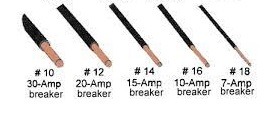
An ampacity shows the highest current a conductor can safely handle without crossing the rated temperature or affecting the insulation layer. That is defined with different factors, such as the material of wire, gauge size, insulation, and installation conditions.
Crossing wire ampacity results from high overheating, voltage losses, and fire hazards that are important for fulfilling the ampacity circuit breaker rating.
Wire gauge shows the thickness of the conductor and is calculated through the American Wire Gauge (AWG) system. For this system, a low gauge shows a thick wire having a high current-carrying capacity; a high number shows a thin wire with a low ampacity.
For high-ampere circuits, like a 60 amp breaker, larger-diameter wires are needed for safe load handling.
60 Amp Circuit Breaker
60 amp breaker protective devices: when current moves in a circuit higher than 60 amps, it trips to stop current flow. It’s mainly working for saving wire to get overheating since it causes device damage or system failure. if current crossing rating breaker capacity or the short-circuit breaker trips and off current. 60 amp breaker main components of medium to high load circuits where high power needed than standard branch circuits
It is normally connected at residential installations, commercial points, and industrial panels. It is also part of the 120 volts or 240 volts circuit according to use.
In case of a large current circuit protection with a 60-amp breaker, the wires should be sized, and wiring techniques should be followed to ensure accurate working.
80% Breaker Rating Rule For 60 Amp Wire Sizing
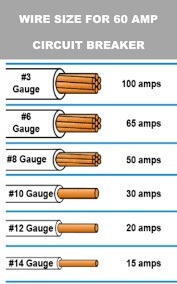
It is sure there is a 6 AWG wire in case of a 60 amp breaker for 220V. The 6 AWG wire comes with 65 ampere ampacity and needed 60 amps for the amp breaker.
There is a need to use important rules for wire size and 80 per cent breaker rules based on NEC code. This rule provides accurate electrical safety; we are not needed for electrical circuits since the selected wire gauge is small.
Here are some features for the 80 per cent rule.
Suppose there is a need to find the wire gauge for a 60-amp breaker. 60 amps means 80 per cent of the wire size we needed. So for a 60 amp breaker, there is a need for wire that manages about 75 amps. So important wire size values are
Wire Size = 60 amps/0.8 = 75 amps
Is it that we make mistakes that connect 6 AWG gauge wire for a 60-amp breaker without considering? 6 AWG manages 65 amperes.
Other wire sizes that handle larger than 75 amps are 4 AWG gauge wires. 4 AWG manages 85 amperes, so larger than the ampacity for proper wiring. 60 amp breaker, also considering the 80 per cent breaker rule details
Recommended Wire Sizes for 60 Amp Breaker
The referred wire size for a 60-amp breaker is 4 AWG aluminium wire and 6 AWG copper wire. It is noted that these sizes are best to use and certain conditions for wire size. Before considering final selection, check NEC details.
Voltage Drop factor
Voltage losses occur when current flows. Devices that are facing voltage loss are less effective. An accurate wire size should be used to reduce voltage losses. Longer wires face fewer voltage losses as a result of less resistance for a larger wire diameter.
read more : What Every Business Should Know About Fire Safety
Copper vs. Aluminum Wire
Copper wire and aluminum wire are the main focus for selecting wire size for a 60 amp breaker. Material features must be considered.
Copper Wire Features
Since it is the best conductor and has high conductivity, copper wire is best for projects where high current capacity is needed. Since it has low resistance, voltage losses decrease.
With that copper wire, it has corrosion resistance and is easy to handle when connected in circuits.
Aluminum Wire Features
As compared to copper wire, aluminum wire is low-cost and lightweight. That is commonly used for larger projects for low-cost options. Aluminum wire has high resistance compared to copper, which causes high voltage losses.
For using aluminum wire, accurate installation methods and parameters are important.
Factors for choosing Wire for a 60 Amp Circuit Breaker
Distance from the Panel
- Long cables cause voltage losses if wire size has the required ampacity that needed to be high for reducing voltage losses and offer stable device operations.
- For longer wiring distances, larger conductors like 4 AWG copper follow fewer voltage losses. selected the following according to circuit voltage, cable length, current, and required voltage losses.
Ambient Temperature
- High ambient temperature helps to minimize conductor ampacity. Wiring connections at high-temperature areas like outdoor enclosures or industrial needed temperature correction.
- If accurate, a map city is low in circulation; a larger conductor is used.
Current-Carrying Conductors
- If many conductors are connected to the same cable, heat dissipation is difficult. For different code systems, an ampacity setting is needed if there are more than 3 conductors in the cable.
- For 4 to 6 current-carrying conductors in a similar conduit, an 80 percent adjustment factor is used. That reduces the required ampacity of the conductor and requires a larger wire size.
Terminal Temperature Rating
- Final allowable ampacity is restricted through the temperature rating of the device’s terminal, not with the insulation of wire. Also, if the conductor insulation rating is 90 degrees, breaker terminals are needed to rate 60°C or 75°C.
- Which is the main cause: 6 AWG copper is not defined as 75A
Electrical Code
Electrical codes differ based on country location; some areas follow NEC rules, and others follow IEC-based standards. so check local electrical codes and check licensed electricians and engineering services.
Comparison of 50 Amp and 60 Amp Breakers
A 50 amp circuit breaker is used where high residential devices are used for high power with less current. Common uses, and comparsion are
| Feature | 50 Amp Breaker | 60 Amp Breaker |
| Rated Current | 50 A | 60 A |
| Maximum Continuous Load (80% Rule) | 40 A | 48 A |
| Typical Wire Size (Copper) | 6 AWG | 4 AWG to 6 AWG* |
| Typical Wire Size (Aluminum) | 4 AWG | 4 AWG |
| Power Capacity at 120V | 6,000 W | 7,200 W |
| Power Capacity at 240V | 12,000 W | 14,400 W |
| Applications | Electric ranges, welders, EV chargers, subpanels | Large HVAC units, hot tubs, EV chargers, subpanels |
| Installation Cost | Lower | Slightly Higher |
| Energy Handling Capacity | Moderate | Higher |
| Risk of Nuisance Tripping | Higher when the load approaches the limit | Lower for larger loads |
| Residential Use | Common | Common for heavy-duty circuits |
| Commercial Use | Moderate-duty equipment | Higher-power equipment |
| Safety Requirement | match wire and load rating | Must match wire and load rating |
| Circuit Protection Level | Protects up to 50A circuits | Protects up to 60A circuits |
Installation Tips
best to follow recommended methods when installation occurs to ensure a strong and safe system. Follow proper installation methods.
To make a strong connection, use accurate wire connectors and terminals.
not crossing high-defined ampacity in wire size. wire needed to accurately connect and protect to prevent damage.
For complex installations, if you’re not sure about process components, get services from a certified electrician.
.