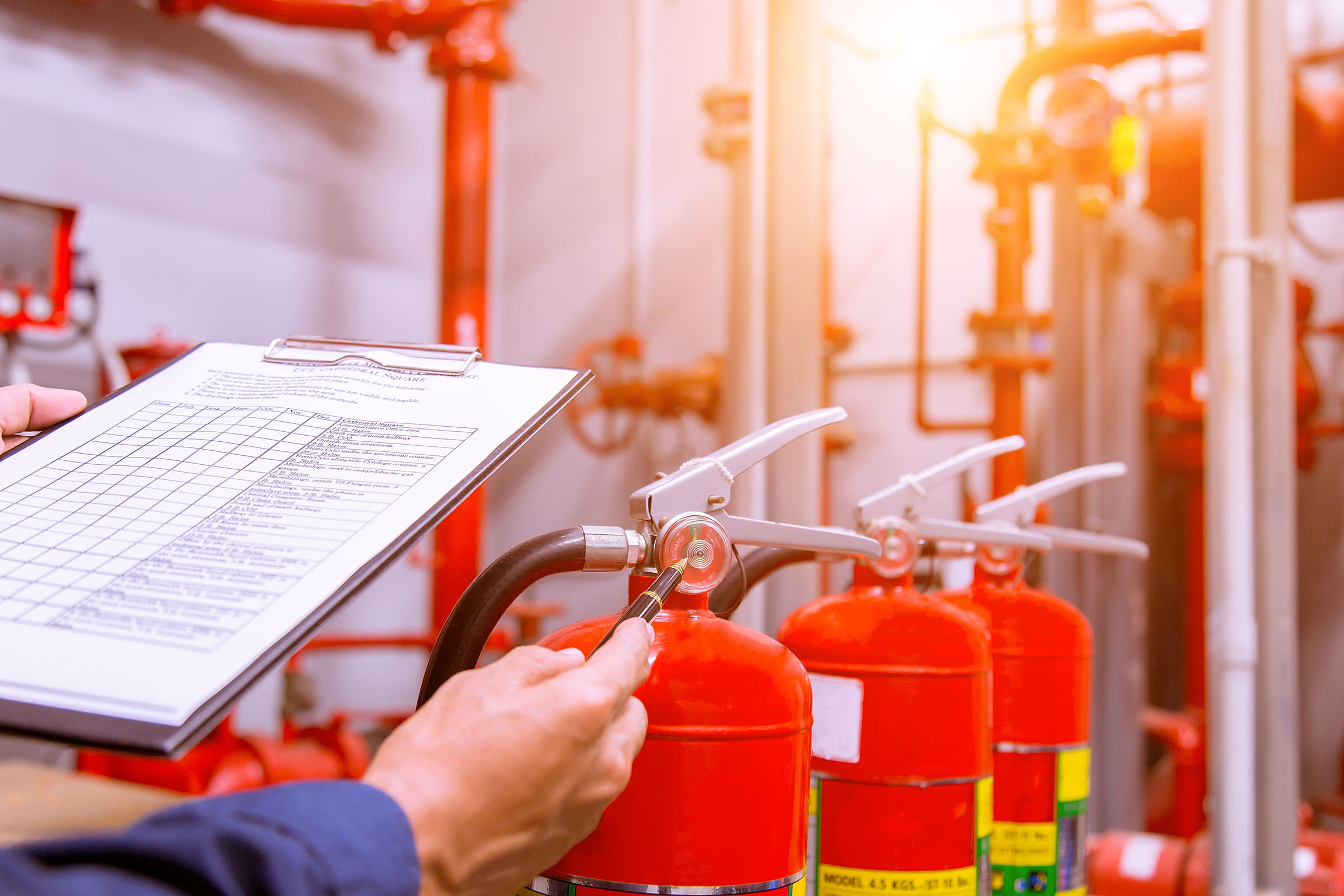
Fire safety in the workplace is one of those subjects that tends to get treated as a compliance exercise — something to be done for an audit, to tick a box, and move on.
In practice, it deserves much more attention than that. A fire at commercial premises can be devastating not just for the building but for the people inside it, and the businesses that come through serious incidents best are almost always the ones that had proper systems in place long before anything went wrong.
This guide covers the essentials: what the law requires, what good practice looks like, and the specific areas where businesses most commonly fall short.
Your Legal Obligations
Under the Regulatory Reform (Fire Safety) Order 2005, any business operating from non-domestic premises is required to appoint a ‘responsible person’ for fire safety. In most cases, this is the employer or the building owner. The responsible person is required to carry out a fire risk assessment and review it regularly, implement appropriate fire safety measures, provide staff with information and training, and keep records if the business employs five or more people.
The fire risk assessment is the cornerstone of all of this. It doesn’t need to be an elaborate document, but it does need to be thorough — identifying potential sources of ignition, materials that could fuel a fire, and the people who might be at risk. It should lead directly to action: removing or reducing hazards wherever possible, and putting in place the measures needed to manage whatever risk remains.
Failing to have a current fire risk assessment isn’t just a regulatory breach. It means that if something does go wrong, the business is likely to be found liable — and that the consequences for staff, and for the company itself, could have been avoided.
Extinguishers — Getting It Right
One of the areas where businesses most frequently get things wrong is extinguisher provision. Having a fire extinguisher on the premises is not, by itself, sufficient. The right type needs to be in the right place, staff need to know how to use it, and the equipment needs to be properly maintained.
There are several classes of fire, and different extinguishers are designed to handle different types. Water extinguishers are suitable for solid material fires — paper, wood, textiles — but must never be used on electrical equipment or flammable liquids. Foam extinguishers cover a wider range but still carry restrictions. CO2 extinguishers are specifically designed for electrical fires and flammable liquid fires, and are standard in server rooms, kitchens, and anywhere with significant electrical equipment. Dry powder extinguishers are highly effective across multiple fire classes but can cause damage to sensitive equipment and reduce visibility, which makes them less suitable for enclosed spaces.
For most commercial premises, a combination of types will be necessary. The specific provision should follow from the fire risk assessment — not from a rough guess at what seems reasonable.
Extinguishers should be mounted on wall brackets at accessible locations, particularly near exits and in areas of higher risk such as the kitchen or server room. They should be inspected annually by a competent engineer and replaced or recharged after any use, even partial use.
The Right Type for Modern Offices
As workplaces have become increasingly dependent on electrical equipment, the CO2 fire extinguisher has become a standard fixture in most commercial environments. Understanding why it’s specified — rather than just accepting it as a given — makes it much easier to deploy correctly.
A CO2 extinguisher works by displacing the oxygen that a fire needs to sustain itself. Unlike water or foam, it leaves no residue, which means it won’t cause further damage to computers, servers, or other sensitive equipment. It’s also safe to use on live electrical installations, where a water-based extinguisher would create a serious risk of electrocution.
The trade-off is that CO2 is less effective on solid material fires such as paper or wood, and the gas disperses quickly in open or well-ventilated spaces. In a large open-plan office with good airflow, a CO2 extinguisher may be less effective than in a smaller enclosed room. This is why placement matters: CO2 extinguishers should be positioned close to the electrical hazards they’re designed to address, rather than simply placed wherever there’s a convenient bracket on the wall.
One practical point that often gets overlooked: CO2 extinguishers get extremely cold during discharge. The horn should never be held during use, and staff should be briefed on this as part of any fire safety training.
Staff Training
Equipment is only as useful as the people operating it. Every member of staff should know the evacuation procedure, where the assembly point is, and who is responsible for coordinating the response in an emergency. They don’t all need to be trained firefighters, but they do need to have enough information to act quickly and correctly under pressure.
Staff who are designated fire marshals — responsible for checking that areas are evacuated and accounting for people at the assembly point — need more thorough training, and this should be refreshed regularly rather than treated as a one-time event.
Fire drills are not optional and not merely performative. They reveal gaps in the plan that paperwork exercises won’t catch — confusion about exit routes, doors that are routinely propped open, assembly points that turn out to be impractical. Run them at least annually, and take the findings seriously.
Common Gaps Worth Checking
Beyond the headline obligations, there are a handful of areas where businesses — including those with otherwise solid fire safety arrangements — consistently have gaps:
- Fire doors. These exist to slow the spread of fire and smoke, and they only work if they’re kept closed. Propped-open fire doors are one of the most common findings in fire safety inspections, and one of the most dangerous. Check that fire doors throughout the building close properly on their own and that staff understand why they shouldn’t be held open.
- Escape route maintenance. Exit routes need to be clear and usable at all times. Corridors and stairwells are not storage space, even temporarily. This applies to external routes as well — a fire exit that opens onto a locked gate is no exit at all.
- Electrical safety. Many workplace fires start with electrical faults. PAT testing, regular inspection of wiring, and sensible policies around device charging — particularly for lithium-ion batteries — all reduce this risk significantly.
- Out-of-hours risk. A business is not only at risk during working hours. In fact, fires that start when premises are empty tend to cause more damage because there’s no one to detect them early. Ensure that heating, electrical equipment, and any processes that generate heat are properly managed at the end of each working day.
Ongoing Responsibility
Fire safety isn’t your regular one-off project. It’s an ongoing responsibility that needs to be reviewed whenever the premises change, when new processes or equipment are introduced, or when staff turnover means that training is no longer current.
The businesses that take it seriously aren’t the ones that have experienced a fire — they’re the ones making sure they never do.
read more : How to Recover Deleted Photos from WhatsApp [2026 Updated]