Summer in Victoria can be hot and humid, and keeping your home comfortable is essential. Many households rely on air conditioners, but running them for long periods can increase energy bills. Fortunately, there are plenty of energy-efficient cooling options available that help you stay comfortable while reducing costs. Programs like the Victorian government free air conditioning rebate make it easier for homeowners to upgrade to efficient cooling systems without a huge upfront expense.
This guide explains the most effective cooling options for your home, how they work, and how you can benefit from available rebates this summer.
1. Split-system air conditioners
Split-system air conditioners are among the most popular cooling solutions for Victorian homes. They consist of an indoor unit and an outdoor compressor and provide fast, targeted cooling.
Why they’re energy-efficient:
- Modern split systems use inverter technology, which adjusts cooling output based on room temperature, reducing unnecessary energy use.
- They allow you to cool specific rooms instead of the whole house, which saves energy.
- Newer units have higher energy ratings, meaning they use less electricity to achieve the same cooling.
Rebate opportunity
Eligible households can access support through programs like the Victorian Energy Upgrades, which reduces the cost of installing energy-efficient units. The air conditioner rebate may also apply if you replace an old system with a new, high-efficiency model.
2. Evaporative cooling
Evaporative coolers, sometimes called swamp coolers, use water to cool the air. They work best in dry, hot climates and can lower indoor temperatures significantly.
Benefits:
- Lower energy use compared to traditional air conditioners.
- Can be used with natural ventilation to improve airflow.
- Provides fresh air rather than recirculating indoor air.
Considerations:
- Less effective in humid environments.
- Requires regular maintenance to keep pads clean and water circulating properly.
Evaporative coolers can be a great complement to other energy-efficient measures in your home.
3. Ducted air conditioning
Ducted systems deliver cooled air through a network of ducts to multiple rooms. They are ideal for larger homes or homes where uniform cooling is needed.
Energy-efficient features:
- Zoning allows you to cool only the areas you’re using.
- Modern ducted systems with inverter technology reduce electricity consumption.
- Proper insulation of ducts prevents energy loss.
Homeowners replacing older systems may be eligible for the air conditioner rebate, making ducted systems a more affordable option.
4. Portable and window air conditioners
While not as energy-efficient as split systems, portable and window units can be useful for cooling individual rooms.
Tips for efficiency:
- Only use them in rooms you occupy.
- Ensure windows and doors are closed while in use.
- Select units with higher energy ratings for better efficiency.
These units are flexible and often require less installation effort, making them suitable for renters or temporary setups.
5. Ceiling fans and hybrid cooling
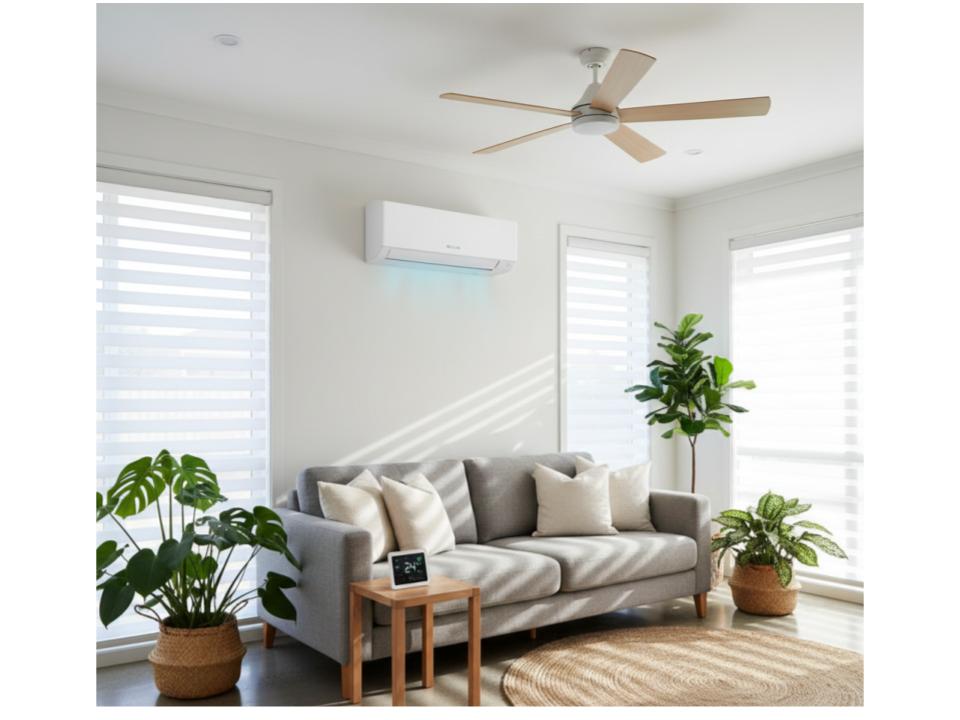
Ceiling fans do not lower the room temperature, but they improve comfort by increasing airflow and enhancing the cooling effect on your skin.
Benefits of combining with air conditioning:
- Fans allow you to set your air conditioner a few degrees higher, reducing energy use.
- They are inexpensive to run compared to continuous AC operation.
- Hybrid setups help maintain comfort without over-relying on electricity.
Fans are simple, low-cost additions that can significantly reduce cooling costs when paired with modern air conditioners.
6. Smart thermostats and zoning systems
Smart thermostats and zoning allow more precise control over home cooling. You can schedule cooling, adjust temperature settings remotely, and control specific rooms independently.
Advantages:
- Reduces unnecessary cooling in unused rooms.
- Optimises air conditioner performance.
- Helps you take full advantage of rebate programs by ensuring efficient operation.
Using smart controls alongside energy-efficient units makes your cooling system more cost-effective and environmentally friendly.
7. Natural cooling strategies
Not all cooling solutions require appliances. Simple changes to your home can reduce heat build-up and complement your energy-efficient system.
Effective strategies:
- Window coverings: Close blinds or use reflective curtains during peak sun hours.
- Ventilation: Open windows early in the morning or late in the evening to create cross-breezes.
- Landscaping: Plant trees or shrubs to provide shade and reduce heat entering the home.
- Roof and wall insulation: Keeps heat out and cool air in, reducing the load on your air conditioner.
Combining natural cooling with energy-efficient appliances maximizes comfort and minimises energy bills.
8. Upgrading old appliances
Older air conditioners are often far less efficient than modern models. Replacing them can save energy and improve comfort.
Signs you may need an upgrade:
- Your AC struggles to cool rooms evenly.
- Energy bills have risen despite normal usage.
- The unit is over 10 years old.
- Frequent repairs are needed.
Upgrading to a new system can make you eligible for rebates like the Victorian government’s free air conditioning rebate, which reduces the upfront cost and encourages households to invest in efficient cooling solutions.
9. Understanding rebate programs
Programs like the air conditioner rebate and the Victorian government free air conditioning rebate are designed to make energy-efficient upgrades more affordable.
Key points to remember:
- Eligibility criteria may include your home type, the appliance you’re replacing, and installation requirements.
- Rebates usually cover part of the installation or appliance cost, making high-efficiency systems more accessible.
- Always check application deadlines and submit the necessary documents before purchase.
These rebates make it easier for Victorian households to adopt modern cooling systems without breaking the budget.
10. Combining strategies for maximum efficiency
No single cooling solution works perfectly on its own. Combining multiple approaches is the most effective way to stay comfortable and save energy.
Recommended combinations:
- Energy-efficient split system + ceiling fans + smart thermostat
- Ducted system + zoning + insulation improvements
- Evaporative cooler + natural ventilation + shading solutions
By using multiple methods, you can maintain comfort, reduce energy consumption, and qualify for rebates that support further upgrades.
Final thoughts
This summer, staying cool doesn’t have to come at the cost of high energy bills. Energy-efficient appliances, smart home solutions, and simple natural cooling methods can all work together to improve comfort and reduce costs. Programs like the Victorian government’s free air conditioning rebate and the air conditioner rebate make it easier for homeowners to invest in energy-efficient cooling systems without a high upfront cost.
By planning upgrades, taking advantage of rebates, and combining strategies, you can enjoy a cooler, more comfortable home this summer while reducing your energy footprint.